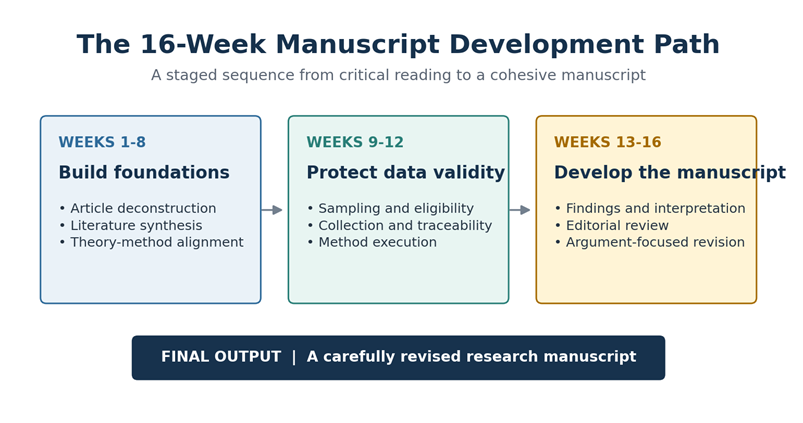

Asia University's MBA Research Methods course guides students through a complete research cycle over 16 weeks, from developing a theoretically grounded research question to preparing a coherent manuscript. The course is designed for students who want to understand not only how research tools work, but also why a particular research design is appropriate for a particular question. The seminar combines critical reading, guided research design, data collection, analysis, and intensive academic writing. Structured feedback throughout the semester strengthens the logic, transparency, and credibility of each project.
During Weeks 1-8, students critically examine four articles from leading journals each week. The purpose is not simply to summarize published studies. Students learn how authors establish a research problem, position their work in the literature, use theory, justify their methods, and support their conclusions. They also identify weaknesses that can reduce manuscript credibility, including unsupported claims, missing citations, imprecise concepts, logical fallacies, and inconsistencies between research questions and analytical choices. These exercises help students develop a focused literature review and a defensible foundation for their own study.
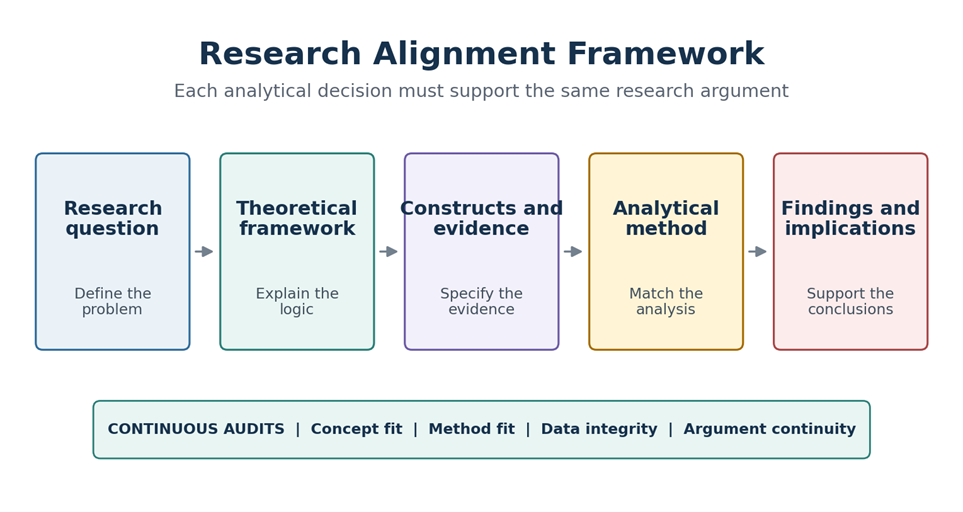
A central feature of the course is the alignment of the research problem, theoretical framework, constructs, evidence, and analytical method. Method selection is treated as a reasoned decision rather than a technical preference. Students first clarify what their research question requires and then evaluate which method can provide appropriate evidence. For topics involving expert judgment, complex relationships, or decision structures, students may use the Fuzzy Delphi Method or multicriteria decision making methods when these approaches fit the research objective. Topics may include digital twin integration, supply chain resilience, sustainability, and other contemporary management problems. In every case, students must explain the logic of the selected method and verify that the concepts being measured correspond to the theoretical argument.
During Weeks 9-12, students move from research design to data collection and execution. The course emphasizes that sophisticated analysis cannot compensate for weak empirical inputs. Students therefore examine participant eligibility, sampling criteria, instrument design, response consistency, and data traceability. Those working with expert assessments learn how to establish suitable selection criteria and document the judgment process. Students using secondary datasets or simulation studies assess data quality, relevance, and reproducibility. Regular checks identify problems before analysis begins and discourage the retrospective adjustment of methods to accommodate inadequate data.
Weeks 13-16 focus on turning the completed research into a cohesive manuscript. The seminar simulates key elements of academic editorial and peer review. Students receive detailed scrutiny of their definitions, thesis statements, evidence, and interpretation of results. Particular attention is given to argumentative continuity: the research problem must lead logically to the theoretical framing, the method must address the research question, and the findings must support the stated implications. Repeated instructor and peer feedback helps students remove unnecessary repetition, strengthen transitions, distinguish evidence from interpretation, and improve the precision of their academic language.
By the end of the course, students are expected to produce a complete and carefully revised manuscript. The work can provide a strong foundation for an MBA research project, conference paper, or later journal submission after any additional development required for the intended outlet. More importantly, students leave with a repeatable process for evaluating research critically and designing studies whose theoretical claims, evidence, and analytical choices form a coherent whole.